

https://tumekestudio.com/welcome-to-tumeke-studio/
At Tumeke Studio, we are not here to make AI tools more efficient. We are not here to create the flashiest game engine on the block. And we are certainly not here to take over the world with our products. We are here to decide what kind of futures digital tools make possible for Indigenous people by staking a claim in the digital space as a Māori owned and operated developer.
Our first products are tied together in development. On the technical side, we are building a logic engine that unlocks richer storytelling and interaction in games. In parallel we are crafting our flagship narrative world, Errata. One tool shapes the other, and both are designed to carry our values forward.
We are especially proud of Errata’s story. It is Earth’s story through our eyes. It asks a simple question: “What about us?” as Indigenous communities confront rising seas, poisoned air, widening wealth gaps, and tightening resource lines. While much of science‑fiction gazes skyward, Errata looks at the ground beneath our feet and says, “This is our legacy. Let us decide how it continues.”
Errata is a kaupapa Māori intervention into how systems behave. As artificial intelligence reshapes game development, we are defining that space before it defaults to the efficiency‑first logic that already governs much of the industry. That matters now, because entertainment is hungry for Indigenous expression. Studios often hire “cultural consultants,” collect lists of dos and don’ts, and then render their own version of our identity. We prefer authorship to oversight.
Welcome to Tumeke Studio—Shaping Digital Futures, Together.
Why Games?
Because games don’t just tell stories, they teach systems of thought.

In Civilization, growth depends on extracting resources, expanding borders, and outpacing your neighbors. Peace is framed as the absence of war, not the presence of relationship. Diplomacy is a number, and conquest is often the shortest path to victory. While we have representatives from indigenous cultures that are include, like Shaka of the Zulus, Poundmaker of the Cree, and Kupe of Aotearoa, the choices they make are not indigenous. Inclusivity is reduced to a skin and one or two talents like Navigation that become obsolete quickly in the game.
Sources like ICT push back against cultural flattening in these products, but go largely unheard unless you’re looking for them. Their Got it Right/Got it Wrong system highlights products like Mortal Kombat, where in spite of multiple objections from indigenous people characters like Nightwolf continue to contribute to the savage native tropes without acknowledging indigenous concerns.
Even in games with moral systems, like Mass Effect or Red Dead Redemption 2, you’re often given binary choices. Save or kill. Help or betray. But the systems around you stay the same. No one reorganizes their village based on your long-term presence. You don’t see values ripple out across generations.
We don’t think these games are bad. I personally love Civilization and have been playing it since the franchise first was conceived of, and my wife and I duke it out on Mortal Kombat regularly. It’s one of her favorites, and I don’t “let her win.” She dusts me, utterly. But they are built on the assumption that individual action drives outcomes. That mastery is about control. That reward flows from domination, efficiency, or charisma.
These are not universal truths. They’re design choices. And they reflect the worldview of those who built them.
What games do provide though is a medium for both expression and interaction that reaches all age groups. Television and movies have wide reach, but they’re rarely interactive. They provide a one-way experience where vision is communicated to the view, and the viewer passively absorbs the content. Games provide a means to interact with systems.
If there are alternative systems to conquest, control, and domination that exist, they are a perfect medium to explore these pathways and challenge dominant social assumptions.
Why Now?
Because if we don’t define ourselves in digital space, someone else will do it for us.
Every year, new games launch that borrow our aesthetics but not our logic. They take our stories, flatten them into tropes, and wrap them in mechanics built for domination, not relationship. And now, those same design patterns are being absorbed into AI tools—training new systems on past failures.
This is not just about misrepresentation. It’s about default logic. AI isn’t malicious. It’s inertial. It learns from what exists. If all it sees are conquest maps, leveling curves, and extractive crafting loops, then that’s what the future of game design will look like. If all it knows are that native tattoos are swirly spirals, and native believes are “mnemonic rituals” then that’s all it will provide when consulted for feedback by new designers that are already relying on AI for fact checking and deep analysis.
We’ve already seen what it looks like when Indigenous voices take the lead instead:
- Never Alone lets you walk through Iñupiaq stories with mechanics built around cooperation and ancestral guidance instead domination.
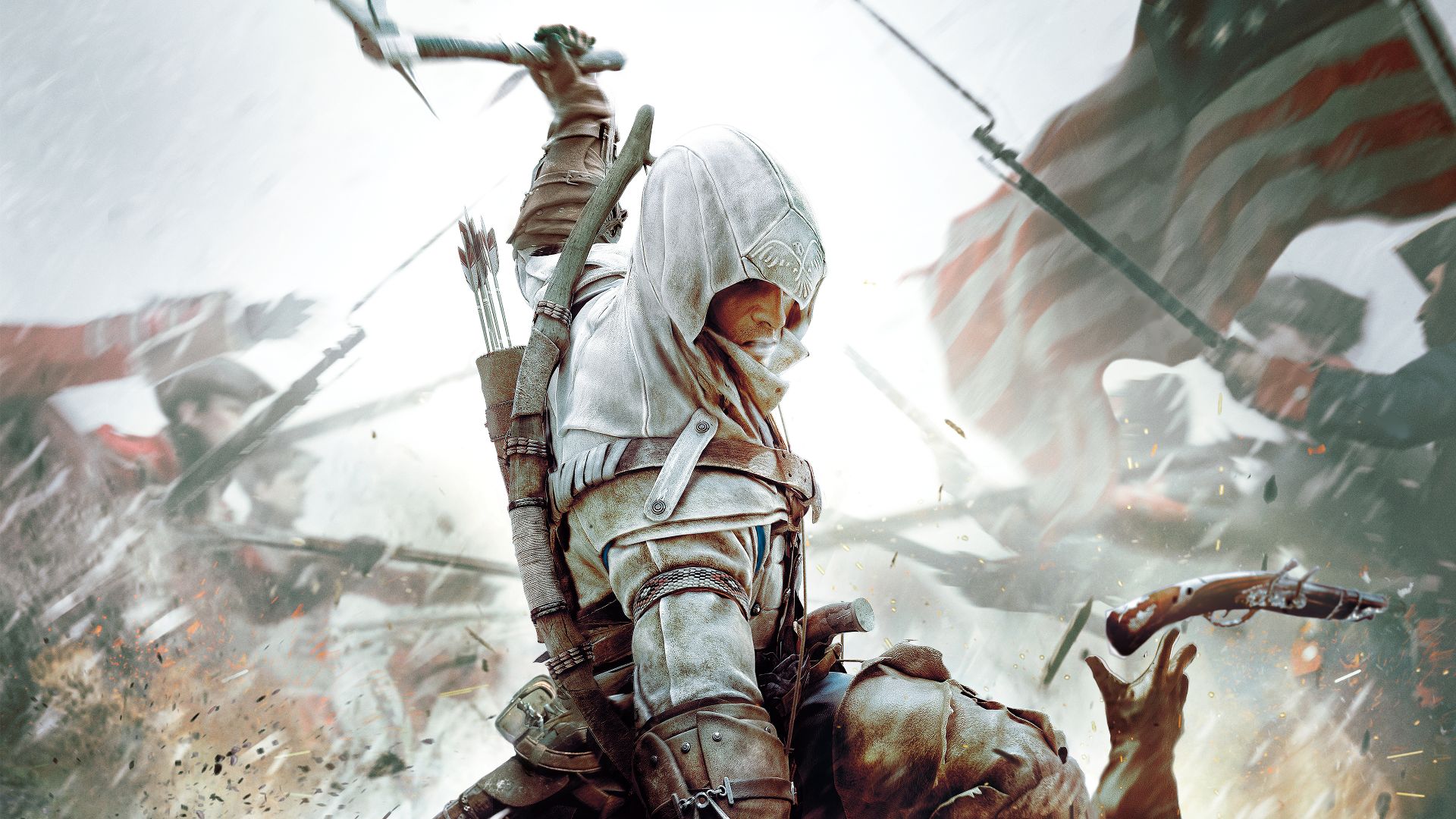
- Assassin’s Creed III, for all its scale, gave space for Ratonhnhaké:ton to move through his world on his terms, with consultation that shaped both narrative and nuance.
- The Raven and the Light uses Cree storytelling logic as system logic. It doesn’t explain everything. It trusts the player to listen, to notice, and to learn.
These games don’t sacrifice joy to deliver meaning. Culturally aware games understand that conflict exists. Its how that conflict is framed and what results from it that is different. These products show what it looks like when Indigenous authorship builds systems from the inside out, using a different moral and social structure as a foundation.
But they are still rare. If we wait, the window will close. Not because we were excluded—but because the defaults set in without us.
This is not just the right time.
It’s the last time we’ll get to set the baseline before it hardens.
What it Means
Tumeke Studio exists because we are not waiting for permission to shape the systems that will define digital life. We are not here to decorate other people’s engines with cultural motifs. We are here to write the logic ourselves—starting with Errata, and extending through every tool, mechanic, and interaction we build.
We’re not doing this because we think people are ill intended. I remember growing up overseas and explaining to many curious people what a Māori was, and where New Zealand was. Even as an adult I would be asked about our language, what we ate, what we were like. I’d be shown pictures of the Hakā, and asked if I knew what it was about. People are curious. This is a good thing.
They want to know more. And studios are giving them that opportunity. But they’re often not working with indigenous voices when doing so, or they’re consulting with an attitude of “historical accuracy” instead of cultural integrity. While this is well intended, it again puts indigenous societies in a position of anachronism. There’s often no future for us.
Imagine a Native American Astronaut. How do you see it? Most people have trouble reconciling where to put the feathers and trinkets inside of a space suit. When I asked GPT to draw a Native American Astronaut it initially objected, citing that such a thing was “a collision of genre and caricature.” I had to explain to it the purpose of the drawing.
This is the indigenous problem.
Our cultures don’t have a voice in the future. They’re viewed as echoes of the past.
We believe Indigenous values are not just aesthetics or theme. They are design systems. They can govern AI behavior. They can shape story resolution. They can determine what counts as progress, and what counts as care. And they can be used to help see futures for our people and create new stories.
The industry will continue moving—with or without us. But if we show up now, with the full weight of authorship, clarity, and technical direction—then we don’t just resist flattening. We reset the terms entirely.
That’s why Tumeke exists.
Not just to participate. But to set precedent.
This is our kaupapa.
Edward Stanaway
Founder and Creative Director
Tumeke Innovation Ltd