
One group that will be often talked about, but seldom seen in town, are the Dryrunners. They are a mobile people organized around Runs, which are multi-wahka caravans that move from the Great Dust Basin to the Highlands on routes that are unpredictable to outsiders.. Membership, roles, and obligations are maintained within the group, and visits to towns are avoided due to ongoing hostility generated from Clone Kings and Janissaries. Most outsiders encounter Dryrunners through intermediaries rather than direct contact.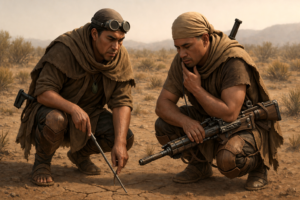
Based on Māori values and customs extended into a fictional what-if scenario, Dryrunner culture uses whakapapa to structure membership and role assignment so kin and responsibility are always traceable, while whanaungatanga frames obligation within and between Runs, shaping how help, care, and accountability travel. The values of manaakitanga set conduct standards for hosts and guests, from sharing water to safeguarding the vulnerable on the road, and kaitiakitanga governs routes, animal welfare, equipment maintenance, and waste avoidance, treating resources as taonga to be stewarded, not consumed.
Exchange with outsiders follows utu, balancing contributions and harms over time rather than chasing quick profit. They protect taonga and decision rights by refusing Clone King jurisdiction and maintaining their own rangatiratanga. Ties to the whenua are anchored in birth and death, and those obligations guide a Run’s course so travel remains in right relationship with local atua under tikanga and kawa.
To many city dwellers, Dryrunners are often treated as a dark rumor or threat. City dwellers tend to rely on stories rather than first-hand experience, and Clone King mass media provides plenty of stories that guide local viewpoints. Traders and drifters, on the other hand, develop working relationships based on consistent exchange and discretion. Runs move parts, tools, and verified instructions across long distances, keeping routes open and bringing capacity that static authorities cannot maintain. Partners who respect Dryrunner protocols can build durable ties, but coercion or forced control usually ends cooperation and access.
Politics and Relationships
Janissaries and military will tend to dislike the Dryrunners. If there is respect, it will be given grudgingly and usually based on their ability to put up a fight. Dryrunners are regarded as fierce warriors who much to the Janissaries frustration (or amusement) operate outside the laws of the Clone Kings. Refusing to bend the knee, this puts them in diametric opposition to the Janissaries and Clone Kings, who’s entire claim to legitimacy rests on the willingness of people to subjugate themselves in exchange for material benefit.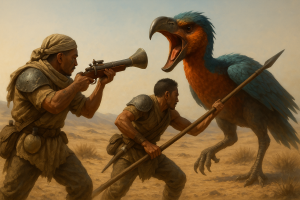
City Dwellers will tend to view the Dryrunners with fear. If pressed, many will not have any first-hand knowledge of Dryrunner aggression. Only stories passed down that a friend-of-a-friend knew a person who had a negative experience. Relying on secondhand hearsay and urban legends, many discussions with city dwellers on Dryrunners will reflect myth and fantasy, rather than reality. Some individuals might sympathize. Some may even be curious. But all will be misinformed, relying on stereotypes created from unverified assumptions, rather than fact. They will often support police viewpoints, because doing so marks them as good citizens who are willing to do their part, thus keeping them in the good graces of authorities.
Traders and Drifters often have a different view of them. Traders are known for bringing in exotic supplies from distant locations. Often these supplies include technology that can be used to replenish or repair dwindling civic stocks. While many know that this technology comes from ruins, the known ruins surrounding each city are by this point long emptied of anything useful. Desperate scavengers may find a minor recyclable item, but two millennia of time has passed since The Collapse. This is more than enough time for scavengers. This leaves many ruins of the day to be populated by raiders, outcasts, or beasts. Most people know to avoid them.
This creates an problem though. How do cities that face a shortage continue to supply the goods necessary to keep society functioning?
Traders and Drifters know that the Dryrunner caravans carry a good deal of this technology. Dryrunner wakha caravans, called Runs by the city people, and mobile cultural centers that range deep into unknown territories. By cultivating good relationships with the Runs, exotic goods can be regularly brought back to the cities. This is not without risk, though. Relationships with the Dryrunners are sought out by Janissaries eager to prove themselves by bringing Dryrunner society to heel, solidifying supply chains and turning Runs into Janissary owned feeder routes. Those trading with the Dryrunners learn to protect their sources, and the Dryrunners appreciate these relationships as a constant flow of information allows them to keep other Runs informed, and keep everyone safe.
Conservation Through Migration
Mobility preserves what static settlements would never be able to. Independence. Early on in Errata’s history ultra wealthy individuals who ultimately led to the Clone Kings established hegemony over much of Earth’s civic wealth. The class divide pushed talented working level individuals out into the fringes, while the wealthy charged them a high premium for civic lifestyles that although attractive, ultimately were geared towards extracting outputs from lower classes, not building wealth. As the cities became more hostile places, people turned towards indigenous cultures for an alternative. This led to a schism between these societies and the corporatists with their employed militias and KPI driven operations models. The corporatists saw these separatists as a threat to their productivity, and labeled them outlaws. This move put these societies in a position were survival was best ensured by continuous movement.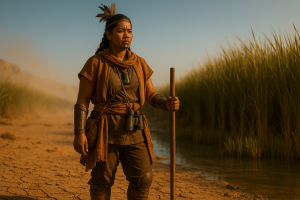
As the world changed this movement to survive became not just a political adaptation, but a way to cope with an environment that could only support people for a very short time. Nomadism became tied to conservation, and tiaki became synonymous with never taking more than you need. Wahka caravans became highly efficient, carrying water pumped from reservoirs found during migration to feed highly productive mobile agricultural units, as well as provide comfort to the people inside these wahka.
Dryrunner Runs are moving civic body composed of multiple wahka that house families, specialists, and shared stores. Each caravan operates as a self-sufficient unit with practical leadership focused on navigation, security, resource management, and cultural continuity. Outsiders find the wahka runs noteworthy because of their extensive carved motifs that extend across many wahka components. Aesthetically beautiful, these also tell the histories of each wahka, where it’s been and what its inhabitants have contributed to aid the wellbeing of the entire Run.
They are not stone-age systems. When an outsider is welcomed into a wahka one of the first things they will see is that the level of technology is just as advanced as anything in the Clone King cities. It’s just used differently. Where Clone Kings and their subjects use technology to dominate, subjugate, and placate in the pursuit of individual power and prestige, Dryrunners use their technology functionally, to benefit the Run, increase survival odds, and protect the community from external threats. This has led Dryrunner technology to be, in many ways, focused on efficiency and outcomes where Clone King expression is focused more on display.
But Dryrunners do not make this technology. The Runs are not manufacturing centers. Dryrunners often harvest this technology from ruins they’ve encountered. Dryrunners are among the most adept vault explorers, and their caravans often have trade items from vaults that the Dryrunners could not put to purpose, but do not wish to see go to waste. Cities benefit from this system even though relations are tense. Local ruins near urban centers have been stripped for centuries, and remaining sites are dangerous rather than productive. Runs and trading caravan partners extend supply lines into territories that static authorities cannot reliably hold, returning with components, tools, and verified instructions that keep civic functions operating. In practice, migration preserves capacity. The Run conserves people and equipment by keeping them in motion where stationary systems would fail.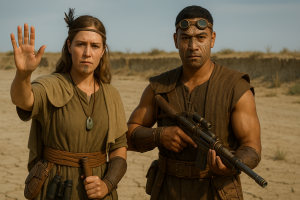
Conclusion
The Dryrunner wahka, the runs, and their political struggle with the Clone Kings and their allies are all part of a rich cultural allegory in Errata that introduces players to what it feels like to be indigenous, with world systems that are constructed not to enable success, but to filter and create failure outcomes. In Errata, the symbols are never neutral, and relationships can be about more than just risk and reward. Signaling is always happening, whether that signal is of subjugation, fear, or resistance, its always present, reminding players that their choices shape their experience. Relationships develop as a consequence of choice, and those relationships will shape your journey through Errata’s systems. Errata is not a moral tale, but one where players explore their own morality through an Indigenous lens.
In our next section we will talk a little bit about Errata’s history and how things got to where they are in the present day for these people.