
Introduction
There is no one reason someone becomes a Drifter. Some are former Plateau citizens who fled debt or psychic registry. Others are descendants of caravan traders, clanless mercenaries, discharged retainers, escaped laborers, or escaped criminals. A few are Dryrunners sent from their Hāku.
Whatever their reason, what unites them is mobility. Like the Dryrunners, they are always on the move. Unlike the Dryrunners, they move not out of any obligation, but for personal reasons—often profit. Drifters provide rare supplies, news, and fresh income to cities that are otherwise often closed loops. They are also often prepared to engage in illegal activities if it furthers their ends.
For many, this makes them a source of profit that can’t be traced.

Behavior and Reputation
In the cities, drifters are tolerated but surveilled. Their presence is always temporary. A few might procure housing, but for many temporary lodgings in trade districts carry them over. While all come into the cities to trade, many will trade through backdoor channels or under assumed identities. A drifter in a city is either useful or soon removed.
Among Dryrunners, drifters are watched. Some are befriended, and many are a source of trade goods. If paths cross multiple times and they prove trustworthy, they can be quietly absorbed, but only after weeks or months of observation. No Hāku accepts instability willingly. The Drifter must commit to the Hakū on equal measure that the Hakū commits to them.
On the road, drifters may form temporary caravans. These are fragile, formed by need rather than trust. Most disband after their mission is completed due to lack of mutual direction, or injury. If a caravan persists, it is because someone inside it has leverage—an old map, a functioning filter, a pre-collapse relic, or a standing oasis that can provide more than just relief from the sun, it can provide an alternative. Information buys protection, and protection creates influence.
In World Logic
Every player starts off their journey as a Drifter. Without loyalty or faction, players are free to choose their own path in Errata, each decision shaping their future playstyle through demonstrating philosophical alignment.
Their own impermanence is both asset and liability. Most only demonstrate performative loyalty to Clone King doctrine. It’s usually enough to satisfy a Janissary. But sometimes this is not enough.
Drifters can be casually accused of crime. This often happens when a Drifter becomes known as, or appears to be wealthy.
Some will argue that drifters embody freedom—that their rejection of sovereign control is power. But the truth is colder: they are what remains when structure fails. Their autonomy is not rebellion. It is aftermath.
Still, Drifters have the most flexibility of anyone in Errata. Without obligation they are free to choose.
Gameplay Functions
In Errata, not every Drifter is a player, but every player starts as a Drifter. That means:
-
You have no historical record or personal alliances.
-
You have limited sovereign protection. This only exists in the city-state you choose to start out in.
-
You have limited fixed assets, and need to find a way to both bring income in, and secure it long term.
You begin with no identity: your reptuation is yours to make.
You’re not a hero. The world won’t help you along in your choices. But it won’t actively work against you, unless you choose to antagonize the system.
Within this condition are choices. And those choices define your play.
Your primary objective is survival. Errata is a cultural survival game. You will be balancing your physical surival needs with the choices the cultures confront you with.
- Food: every character must feed themselves. This is similar to most survival games currently on the market.
- Water: Dehydration is a constant risk, and water is tightly controlled. You will learn to manage an environment where wealth directly translates into water access.
- Protection: Without long term protection and shelter your prospects are minimal. Cities offer this if obedience is your choice. Other alternatives exist as well.
Navigating the culture can prove much more difficult. As a drifter your position is one of tolerance. This is a very delicate word. When you tolerate something you are fundamentally unwelcome. The behavior to remove you is restricted by a stronger motivation. Your choices will change this tolerance to either trust or intolerance, and from those even further consequences emerge.
You will need to learn how and why the cultures operate the way they do, and work within them if you choose to remain, or save up enough means to escape them if your desire is to leave.
Appearance and Equipment
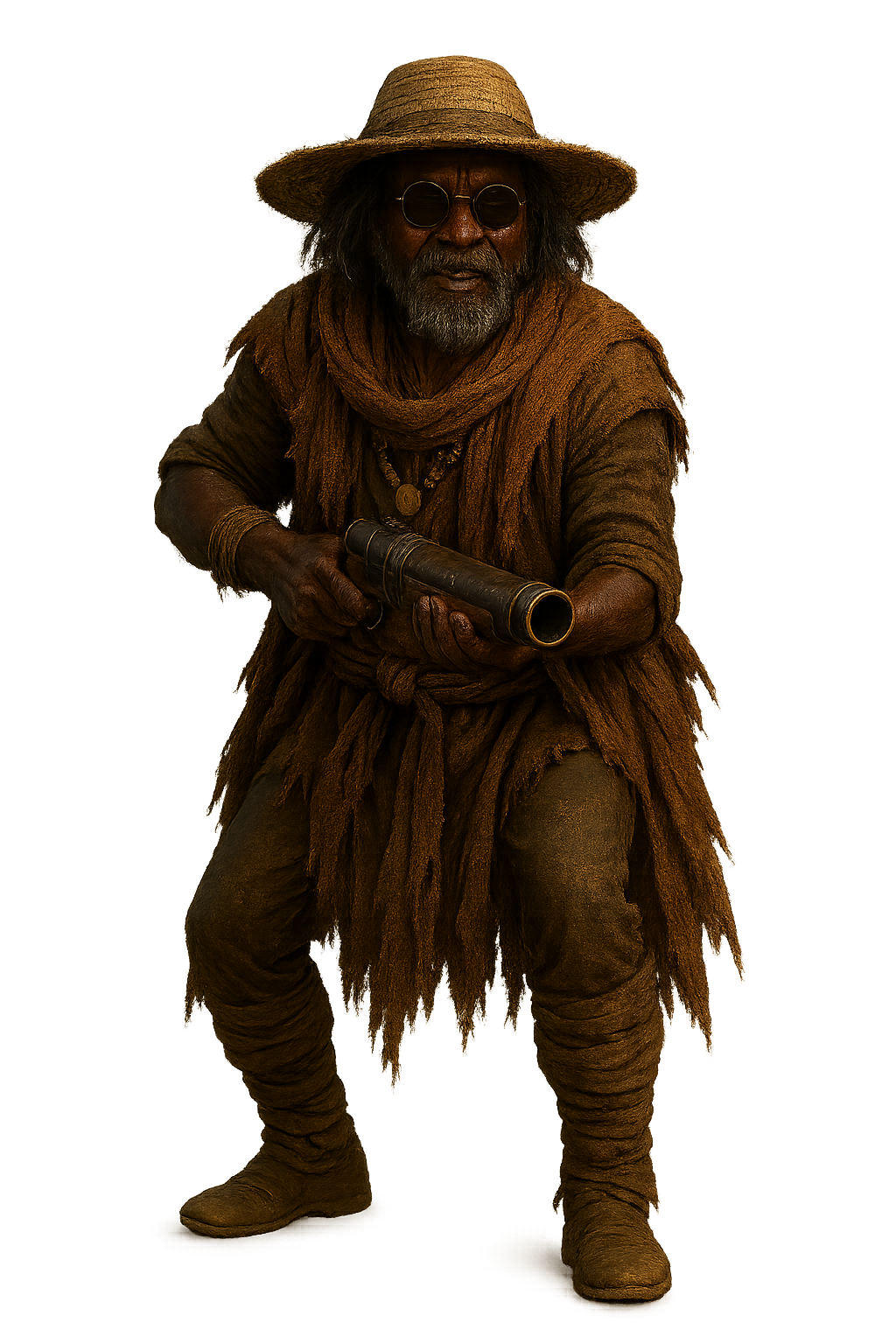
As a drifter, you wear what you’ve carried. Every item is function-first:
-
Goggles, wraps, and filtration masks
-
Layered fabrics, scavenged metal fittings
-
Composite footwear bound in straps and resin
-
Portable storage, modded containers, repurposed signal gear
There’s no uniform. No clan to dress for. No color to declare. A drifter’s loadout is a statement of priority—how you think the world’s going to try and imprison you, steal from you, or kill you next.
Your starting equipment might include:
-
Makeshift melee weapons
-
A water container
-
Light desert clothing providing basic sun protection
-
Two town contacts to start you on your journey, or ignore completely
Each Drifter’s situation is unique. There are no starter quest lines, but each beginner mission is set up to include basic criteria that introduce you as a player to the ethical choices that will shape your journey through Errata.
Objectives
Every Drifter must earn their place, it’s not simply given to you because you exist. You are not the hero of this story. But it is your story.
Drifters have the ability to convince other non-player characters to join their side by building relationships with these characters over time. What may start off as an employment contract may gradually turn into a friendship. This is the point where you can invite this individual to join up with you and pursue shared goals.
Conversely if you fail to perform agreements, commit crimes against, or assault a character within the world, they will remember you and can become your enemy, and even your nemesis. Enemies and nemesis can encourage other players to take action against you, and offer rewards for doing so. They may also provoke Janissaries, Trade Houses, and Clone Kings to engage you negatively.
As your relationships grow you will need to support your group. It may expand to form caravans that travel the wastes. It could even discover an oasis to settle down at and build a chance at a new life. All choices come with consequences, good and bad, new friendships, and new enemies.
Each journey is dynamic, and will never be repeated again.
Support the Build
Like what you see? Help us build Errata—an original world shaped by Indigenous creators, on Indigenous terms. We’re early in development and every bit of support helps bring this vision to life.